
Sandoval Projected Versus Actual Release
A projected release date, often shortened to PRD, is a calculation based on information available at that time. An actual release date records an event that took place. NMCD's official certified case summary form keeps these concepts separate. It includes parole eligibility, projected release date and calculation method, full-term date, time served, presentence custody credit, and good-conduct or statutory credits.
That distinction is central for a Sandoval County case. A sentenced person in NMCD may have a calculated PRD. Someone held at Sandoval County Detention Center before trial may have no fixed date at all. Bond may be set, reduced, posted, denied, or affected by a hold. A court can issue a release order, yet another jurisdiction may still receive the person. The jail's completed release transaction is therefore more reliable than an estimate when confirming what happened.
Release and discharge also differ. Physical release can begin parole or another form of supervision. Discharge is the later end of the relevant sentence or supervision status. A parole eligibility date merely identifies when a legal step may become available. It does not guarantee a Board result or the date the person will walk out.
Find Sandoval Projected Release Dates
Start with the last known custody system. The NMCD Offender Search covers NMCD prisoners and state probation or parole. It does not have jurisdiction over county or city detention facilities. Its live form accepts a first name, last name, or offender number, with Active, Include Inactive, and Absconder Only controls. The public interface was verified, but the research did not establish that every result displays the internal PRD field.
For a county-jail calculation, first check the Sandoval County current-list page and its live SCDC roster. Neither is a released-person archive. Ask for the jail calculation and completed release event through the Sandoval County records portal. The Sandoval County Sheriff may hold a separate arrest or transport record, but the detention custodian and filing court control the jail and sentence documents.
- Confirm whether the person is at SCDC, in an NMCD prison, on state supervision, or in another system. Do not apply state-prison data to a county-only stay.
- For NMCD, search by full name or offender number. Use Include Inactive when the person may have been released or discharged.
- Read the public status conservatively. Ask the institution or probation and parole office to confirm legal status because NMCD warns that people move and data may lag.
- When the precise calculation matters, request the certified case summary and release authorization through the NMCD records portal.
- For SCDC, obtain the judgment from the filing court and request the jail's sentence-credit calculation, release event, and any transfer destination.
- After the event, compare the projected date with the executed release record. The broader Sandoval County release search explains how to verify the county record.
NMCD says adult-prison information is updated nightly and asks users to allow time for those changes. Probation and parole information is described as real time. A prior record can also disappear because of a technical issue. For that reason, a no-result is not proof of release, completion, or discharge.
Use the filing court when the custody question begins with a Sandoval County sentence. District court handles felony trial matters and lower-court appeals. Magistrate and municipal courts handle different stages and offenses. A bond order or sentence entry can explain the legal basis, but general Case Lookup does not supply every filed document. Request the actual judgment, amended order, release order, or satisfaction from the court that filed it.
The official NMCD search overview shown in this manifest image explains the scope and verification warning.
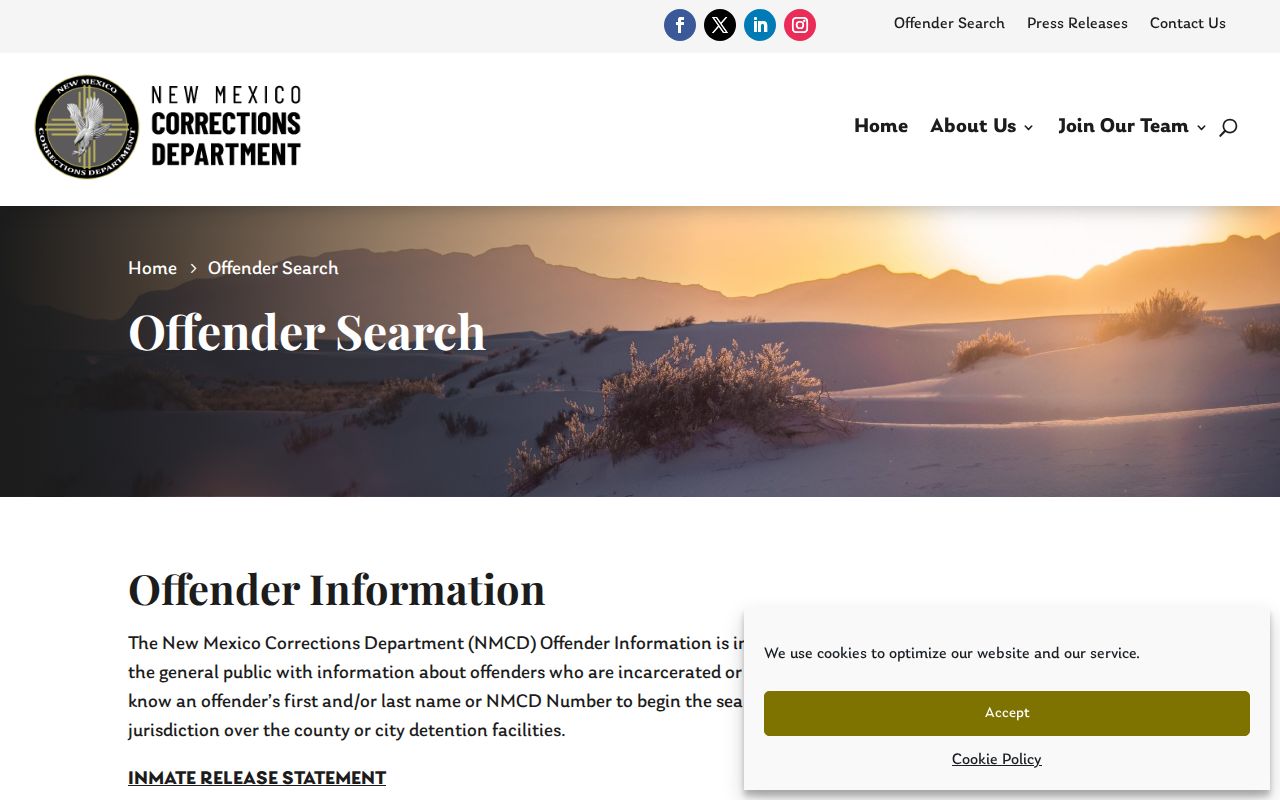
It helps separate a state-prison calculation from an SCDC release, which remains a county jail and court records question.
Sandoval NMCD Date Fields
New Mexico does not reduce release planning to one number. The certified case summary separately records dates and credits with different legal meanings. Offender Management Services, or OMS, calculates release dates from the judgment and sentence, accounts for earned and forfeited good time, and maintains the official sentence information.
| Field | What it means |
|---|---|
| Parole eligibility date | When the governing sentence and law allow the parole step |
| Projected release date | The current calculated date using applicable sentence inputs and credits |
| Calculation method | The basis used to produce the projected date |
| Full-term date | The sentence endpoint before applicable deductions or adjustments |
| Time served | Custody credited through the record date |
| Presentence credit | Qualifying custody time credited before the sentence |
| Good-time credits | Earned, forfeited, restored, or other authorized deductions |
The page from NMCD Offender Management Services and Classification appears in the successful manifest image below.

This agency record identifies the office responsible for the calculation, not merely a public-facing search field.
Note: The official form proves that NMCD maintains these fields, but it does not prove every public search result displays each field.
Sandoval Release Credits Under NM Law
NMSA 1978 § 33-2-34 governs meritorious deductions for NMCD prisoners. These deductions are often called good time, and the NMCD Offender Family Guidebook provides corrections context. The statute applies offense categories, conduct and program requirements, credit awards, forfeiture, and restoration. The serious violent offense rate is generally capped at four deduction days per month served. If the maximum applied without interruption, the rough result is 30 days served for each 34 days credited, about 88 percent.
New Mexico should not be described as a universal 85 percent state. Qualifying non-serious-violent categories may receive more credit, commonly up to 30 days per month under the current framework, but the statute's classifications and exceptions control. Some offenses are expressly listed. Others can turn on a judicial finding. The judgment, effective law, offense type, presentence credit, conduct, program credit, and administrative postings all affect the individual calculation.
OMS begins with the judgment and sentence. It identifies concurrent or consecutive terms, which determine whether sentences run together or one after another. It then applies lawful presentence credit and the correct statutory credit framework. Earned, forfeited, and restored deductions are posted over time. Other sentences and holds must also be reconciled. This is why two people with similar sentence lengths may have different projected dates.
For an SCDC sentence, do not import NMCD's prison formula. No official Sandoval County jail good-time policy or weekend-release rule was found in the reviewed sources. Obtain the municipal, magistrate, or district judgment, then ask SCDC for the applicable jail calculation and court-authorized credit.
A county detainee held before disposition sits in a different framework. Bond eligibility, an order of release, dismissal, time served, or a transfer can end the SCDC episode. None creates an NMCD projected date unless the person also enters state corrections custody or supervision. When the jail calculation is unclear, request the booking period, sentence-credit worksheet, presentence credit, and release authority. Do not estimate a date by subtracting a general good-time rate from the announced sentence.
Why Sandoval Release Dates Change
A projected date uses current information. When one input changes, the date may move. A delay does not always mean misconduct, and an earlier date does not guarantee that the person will enter the community. Read the reason through the sentence record, agency calculation, the New Mexico parole rules, and any receiving-authority record.
| Change | Effect on the date or release | Best record |
|---|---|---|
| Credits earned or restored | May move the calculation earlier | Certified case summary and OMS record |
| Credits forfeited | May move the calculation later | OMS credit posting and applicable decision |
| Presentence credit corrected | Changes credited time already served | Judgment, amended order, and case summary |
| Concurrent or consecutive terms | Changes how multiple sentences combine | Judgment and sentence calculation |
| Appeal or amended judgment | Can change the controlling sentence | Filing-court order |
| Parole plan or decision | Can affect the path and timing of physical release | Board order and NMCD confirmation |
| Warrant, detainer, or hold | May block community release or cause transfer | Receiving-agency and movement records |
A detainer is a request or hold from another authority. If SCDC or NMCD transfers the person to another jail, ICE, federal custody, or a different jurisdiction, the first custody episode ends without a community release. Ask for the destination or receiving-agency field rather than treating the first agency's release date as proof the person is free.
Note: A change in release mechanism can occur even when the sentence calculation itself remains the same.
Confirm Sandoval Actual Release Dates
Ask the institution or assigned caseworker for operational instructions. A family should not arrive at a gate based only on a PRD. NMCD's search warning says Central Office, Constituent Services, and the Records Bureau do not provide release updates or statuses. The institution or probation and parole office is the operational confirmation route. Records staff can provide existing documents, not predict a future movement.
For NMCD, follow its official IPRA notice and request the public release authorization, actual release or discharge date, certified case summary, and parole documentation through the records portal. For SCDC, call 505-867-5339 and request the county booking and release transaction through the public-records route. The court order can explain authority, while the facility movement record shows whether the person went to the community or another agency.
NMCD lists inmate records at 505-690-9790 and probation or parole at 866-416-9867, but its published warning controls how those contacts are used. Current movement and legal status go to the institution or supervising office. Existing sentence documents go through the records request channel. Victim Services also publishes a release-date and status line for victims and family at 877-842-8464 during its stated weekday hours. Each contact has a different role, so one office should not be asked to answer for another.
New Mexico VINE may provide a pending-release notice from participating agencies. Its NMCD component carried an upgrade limitation at the research date, although existing NMCD release notifications continued. Registration is not the final record and does not follow a person automatically after transfer. The Sandoval County VINELink check explains the separate search and alert process.
The live NMCD search controls shown in the manifest image include Active and Include Inactive choices used during the first check.
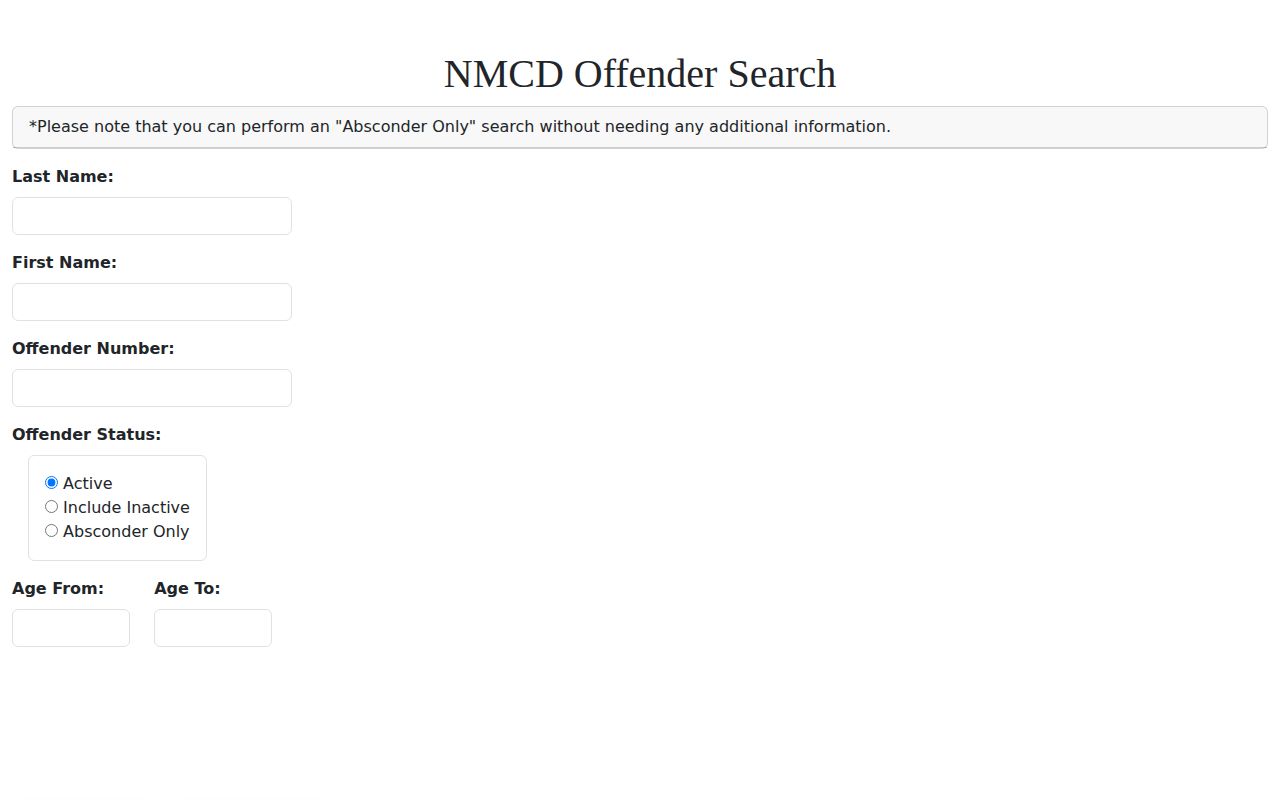
Those controls help locate a possible record, while the executed agency document remains the proof of actual release or discharge.